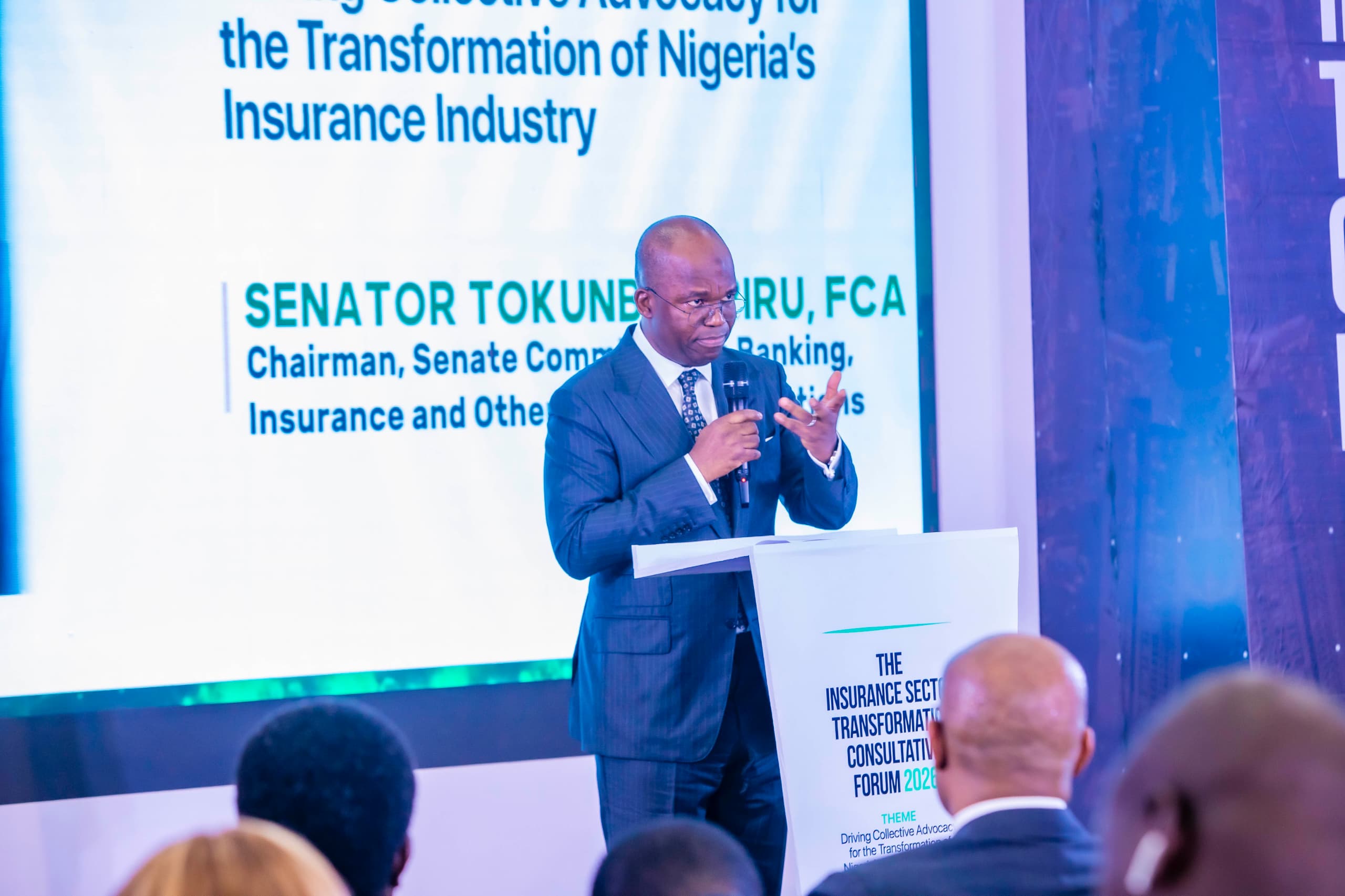
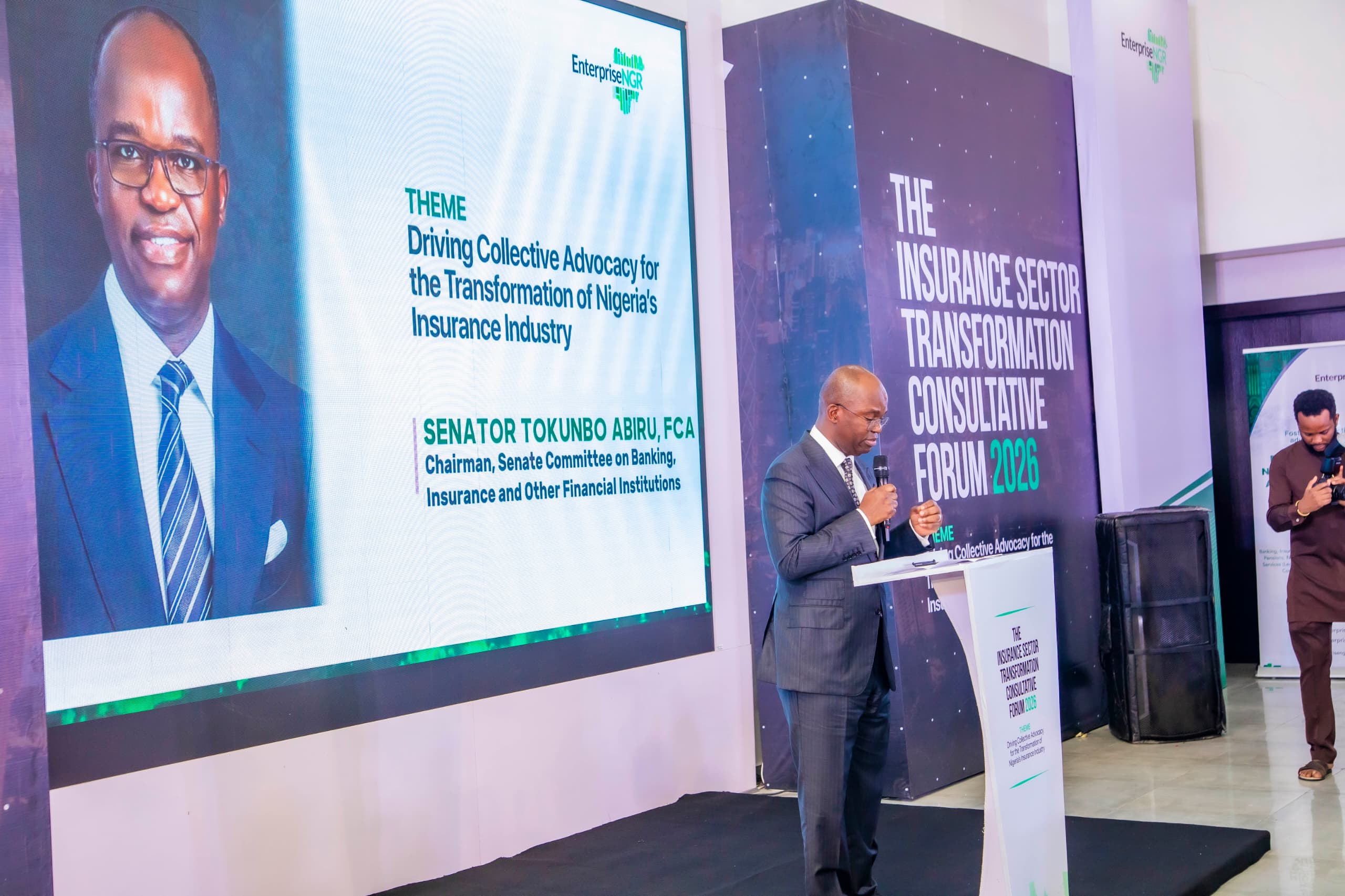
The Chairman of the Senate Committee on Banking, Insurance and Other Financial Institutions, Senator Mukhail Adetokunbo Abiru, FCA, has described the recently passed Nigerian Insurance Industry Reform Act as a decisive step toward repositioning the country’s insurance sector for growth, resilience and global competitiveness.
According to the senator, the reform law represents a critical legislative milestone aimed at modernising the legal framework governing the industry and unlocking its long-standing potential.
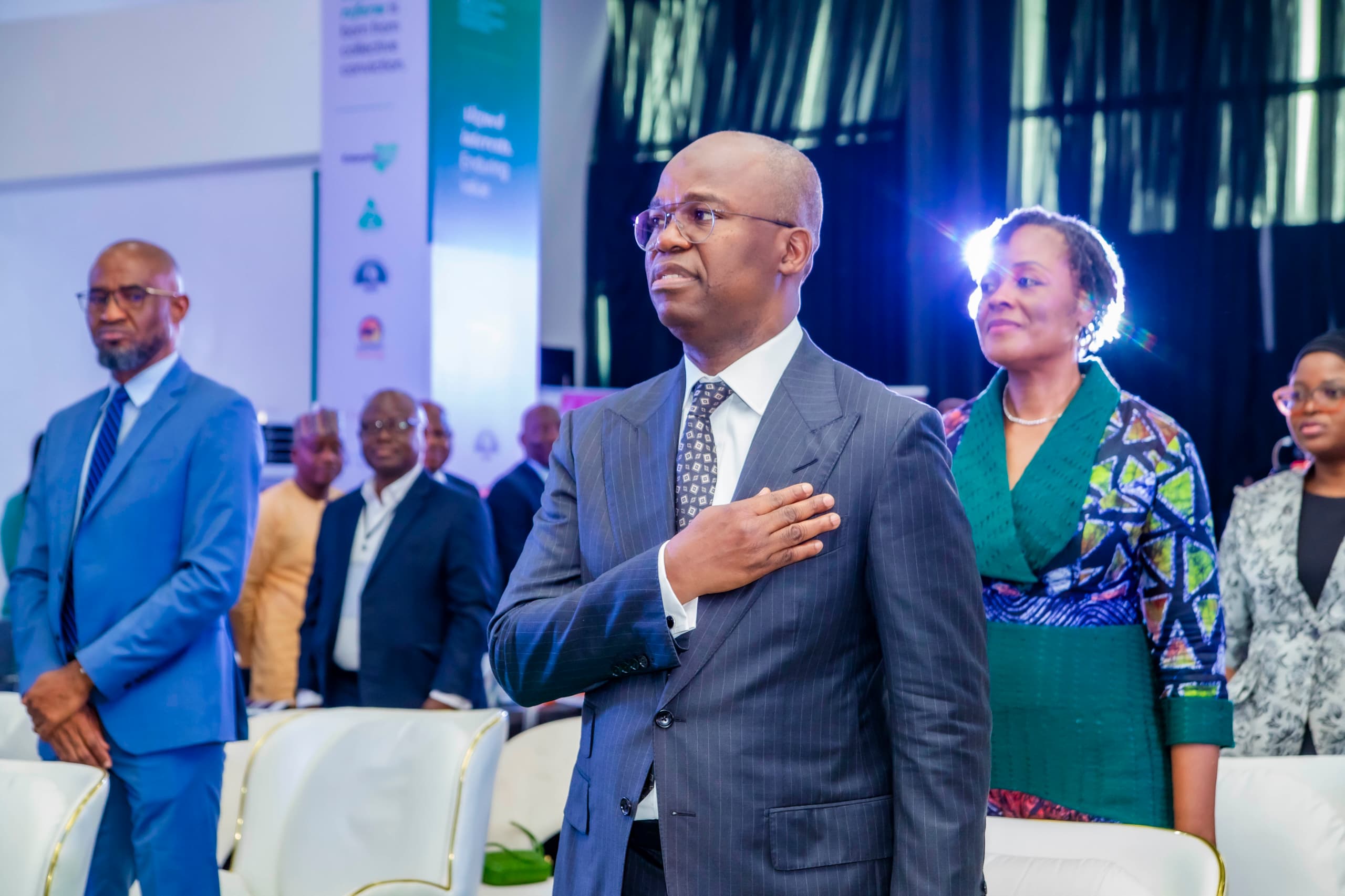
Abiru stated this on Wednesday while delivering a keynote address at the Insurance Sector Consultative Forum organised by EnterpriseNGR at the Nigeria Insurers Association Conference Hall, Victoria Island, Lagos.
Speaking on a topic titled, “Reform, Resolve, Results: Powering a New Era for Nigeria’s Insurance Sector,” the lawmaker noted that despite Nigeria’s population of over 200 million people, insurance penetration remains about 0.44 percent of Gross Domestic Product (GDP), indicating significant room for expansion.
Senator Abiru said although gross premiums reached about ₦1.56 trillion in 2024, the industry’s long-term investment capacity remains modest compared with other emerging markets. Drawing comparisons across Africa, he observed that insurance penetration exceeds 11 percent of GDP in South Africa and is above 2 percent in Kenya, largely driven by innovation and wider distribution channels.
The lawmaker further noted that the expected outcomes of the reform include stronger solvency standards, faster and more transparent claims settlement, increased insurance penetration among households and small businesses, and improved enforcement of compulsory insurance policies, stressing that the reforms had restored consumer confidence in the industry.
He said that a stronger and well-capitalised insurance sector would significantly contribute to national economic resilience by providing long-term financing for development projects. According to him, insurance companies globally serve as major institutional investors that support infrastructure development and economic expansion.
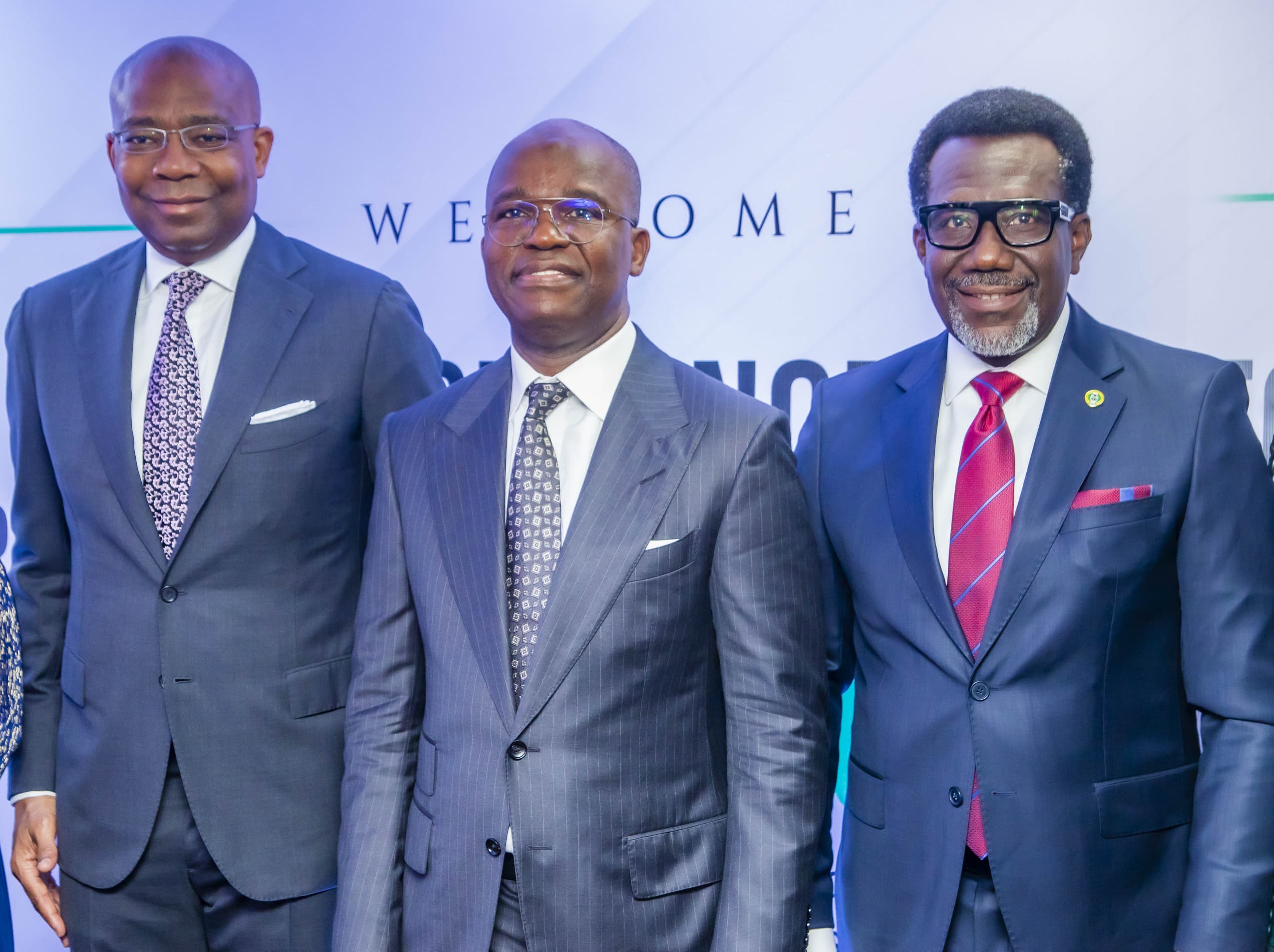
The Chairman of EnterpriseNGR, Mr. Aigboje Aig-Imoukhuede; Commissioner for Insurance and Chief Executive Officer of the National Insurance Commission (NAICOM), Mr. Olusegun Omosehin; and other prominent industry leaders emphasised the urgent need for coordinated reforms, stronger industry collaboration, and innovative approaches to expand insurance adoption and improve public confidence in the sector.
On why the EnterpriseNGR,is convening critical meeting of top stakeholders in the insurance industry, the Chairman of EnterpriseNGR, Mr. Aigboje Aig-Imoukhuede, said: “The greatest source of growth for any economy is investment, and the lever through which that growth is achieved is the financial and professional services sector. So we want to have a vibrant financial and professional services sector. One of the most important professions and services across the world is insurance, and that is why we are focused on the insurance subsector at this time.
“The whole idea is to achieve a level of relevance of insurance in the economy that is higher than what it is today. Right now, we are under one percent penetration in terms of insurance-to-GDP ratio. Some countries are at three percent, others at 11 percent. So if we grow from where we are today to three percent, that is tripling the sector, and if we go to 11 percent, that is ten times growth. The effect on the overall economy will be tremendous.”
Also, the Commissioner for Insurance and Chief Executive Officer of the National Insurance Commission, Mr. Olusegun Omosehin, disclosed that: “Given the ambition of President Bola Tinubu on the direction of the transformation of the Nigerian economy, the transformation of the insurance sector is no longer optional. It has to commence now.
“Given the level of work that has been done at the regulatory end, it then becomes obvious that we needed a platform for collaboration across all stakeholders in the financial services and professional ecosystem to ensure that the desired transformation is given meaning. There is no nation on this planet that can successfully transit to that level of growth without the resilience required from the insurance sector.”
Also speaking, the President and Chairman of Council of the Chartered Insurance Institute of Nigeria (CIIN), Mrs. Yetunde Ilori; the Director-General of the Nigerian Insurers Association, Mrs. Bola Odukale; the Chief Executive Officer of EnterpriseNGR, Obi Ibekwe; and other stakeholders underscored the importance of collective action across regulators, policymakers, insurers, brokers, and other stakeholders to address structural barriers limiting insurance penetration and strengthen the sector’s contribution to Nigeria’s economic development.
They emphasised the need for stronger collaboration between industry stakeholders, professional bodies, and academic institutions to build a future-ready workforce while reinforcing ethical standards and continuous professional development across the sector.
Odukale said, “the talks about collaboration are very important because we are transitioning in terms of reforms, like the NIRA Act 2025, which is going to transform our market. So when we are talking about transformation, you actually need people that you will collaborate with. You can’t do everything just by yourself.
“For us as an industry, collaboration is key and this is very important to us. We believe it is going to have a lot of impact on the ability to deepen insurance penetration in Nigeria and also for our industry to continue to give value to the insuring public.”.
Participants at the forum also examined the key factors responsible for the low adoption of insurance products in Nigeria, including limited consumer awareness, trust deficits driven by claims disputes, and inefficiencies in customer experience.


